By Alyssa Nyberg, Restoration Ecologist at The Nature Conservancy’s Kankakee Sands
Back in grade school I learned about the fascinating ways in which butterflies and bees pollinate flowers. As they gather energy-giving nectar from a wide variety of flower shapes and sizes with their perfectly adapted proboscis and tongues, their bodies are simultaneously gathering pollen on their heads, legs and bodies, sometimes intentionally other times unintentionally. Some of this pollen is inadvertently transferred from one flower to another as it sloughs off the butterfly or bee’s body and attaches to the sticky, pollen-gathering style of a flower. This transfer of pollen leads to the fertilization of the flower and the creation of seeds, thus ensuring the next generation of flowers. Magical!
From the tuft of grey hairs upon my head, you would be right to assume that it’s been some years since I was last in grade school and that during that time, science has learned more about pollination. And it has!
This spring, while I was out in the Kankakee Sands prairie scouting for native plant seeds to harvest, I listened to a podcast called In Defense of Plants. On the podcast, host Matt Candeias and guest Dr. Mary Jane Epps were discussing her research on swallowtails pollinating azalea flowers–not with their heads, legs, or abdomens–but with their wings!
And almost on cue, I look over to my right and I see a monarch butterfly sipping nectar from a native field thistle flower with its proboscis (mouth part). Simultaneously its wings graze the adjacent purple field thistle blossom in full bloom. Looking closely, I could see the grains of yellow pollen on the outer edges of the monarch’s wings!
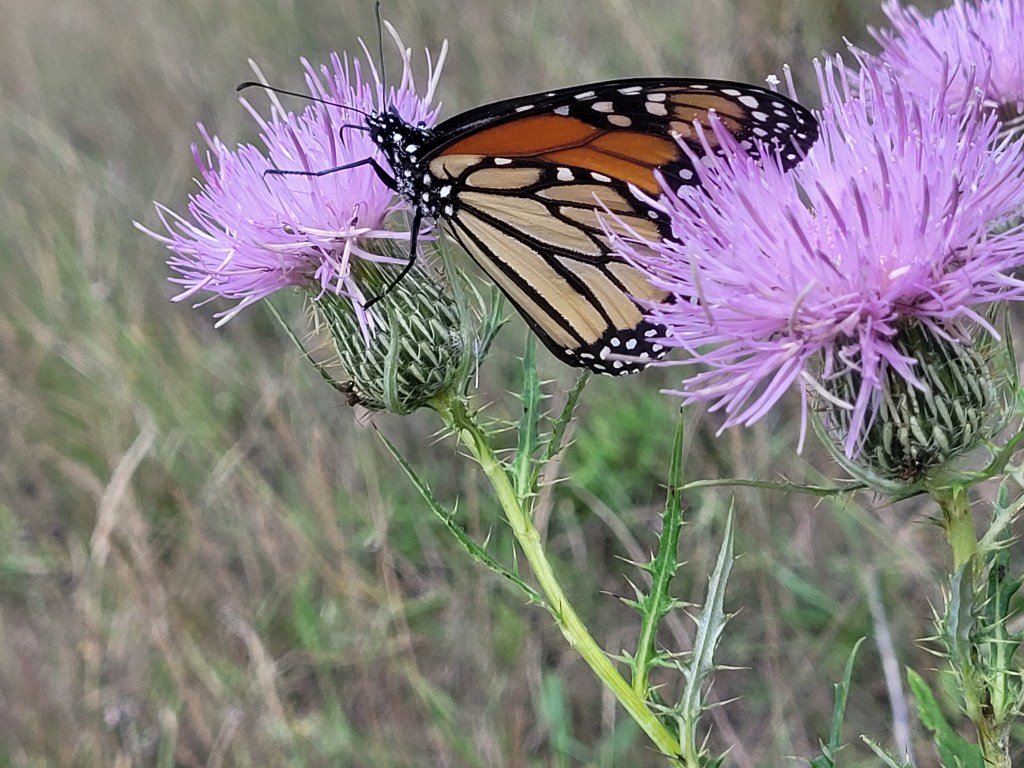
So many questions came fluttering into my mind: Did the monarch know it had pollen grains stuck to its wings? Did it intentionally put the pollen there? If not, could it get the pollen off if it wanted to? Would it be able to successfully move the pollen from one field thistle to another? If monarchs can move pollen on their wings, how many of the other 68 species of butterflies documented at Kankakee Sands can do the same?
The state-endangered regal fritillary is one of those 68 butterflies flitting about the planted prairies of Kankakee Sands. Each summer, our TNC staff, DNR staff and volunteers conduct a survey to count the number of regal fritillary butterflies present at Kankakee Sands, Beaver Lake Nature Preserve and Conrad Station Savanna. In addition to counting individual butterflies, we also note what each butterfly is doing and which flowers they are visiting. As it turns out, butterflies do a wide variety of things – nectaring, ovipositing eggs, resting, chasing other butterflies and mating. Now we have one more thing to watch for – wing pollination!
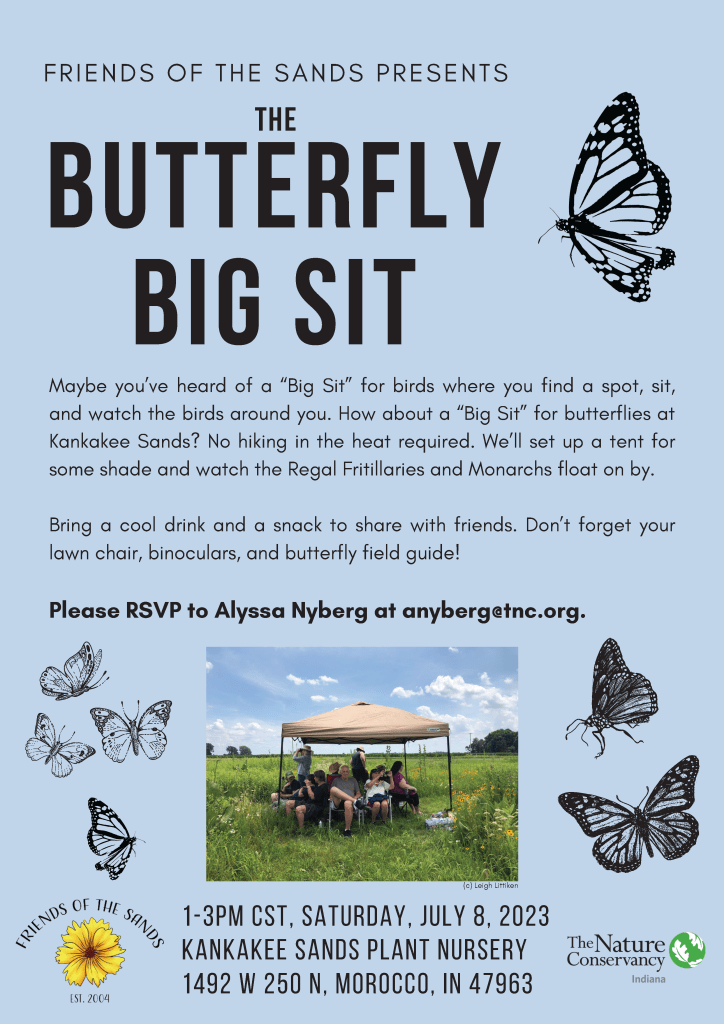
Join us this summer for our annual Butterfly Big Sit on Saturday, July 8 at the Kankakee Sands Nursery. This event, hosted by Friends of the Sands, is always a relaxing day of marveling at the beauty of the butterflies gliding, flitting and fluttering over the prairie. We’ll be sure to keep a keen eye on those wings and look for pollen, too. We hope you will join us! Visit nature.org/indianavolunteer to find out more and to RSVP.
And just like butterflies engaging in wing pollination, we humans may not always know the lives we touch. Whether it is a kind word, a kind gesture, spending time in nature, or marveling together at the beauty of a butterfly –those things can have a lasting impact on person. At Kankakee Sands, we interact with people of all ages and abilities, including visitors, seasonal employees and volunteers. We’ve heard from many that the time they spent at Kankakee Sands with friends, family and coworkers has been a lasting and meaningful memory. Some even say that it changed their lives! Perhaps we humans have magical wings, too.
This summer, bring family and friends to Kankakee Sands to see the butterflies. You never know which ones you might see, and you never how meaningful and profound that time together might be.
_____________________________________________________________________________________
The Nature Conservancy’s Kankakee Sands is an 8,400-acre prairie and savanna habitat in Northwest Indiana, open every day of the year for public enjoyment. For more information about Kankakee Sands, visit www.nature.org/KankakeeSands or call the office at 219-285-2184.
 Friends of the Sands