By Alyssa Nyberg, Restoration Ecologist at Kankakee Sands
Now that it’s February, we will be moving the Kankakee Sands bison herd from the north grazing pasture to the southern grazing pasture. At approximately 400 acres, the northern pasture provides adequate forage for several months, and then it is time to move them to our bison to the larger 800 acres pasture for the spring, summer and early fall.
The smaller northern pasture affords wonderful views of our bison herd, especially from the two new viewing platforms. The larger southern pasture provides more habitat for grazing and places for protection, which is so important when bison cows are giving birth to calves in late spring.
At one time, majestic herds of bison roamed much of north America from western Canada through the Great Plains and Midwest to Mexico. Those herds moved with a wisdom inherited from generation to generation, in time with the seasons and the needs of the herd. They were 30-60 million strong – powerful keystone species of the prairie, able to sustain themselves through time. Imagine seeing so many bison across the landscape!
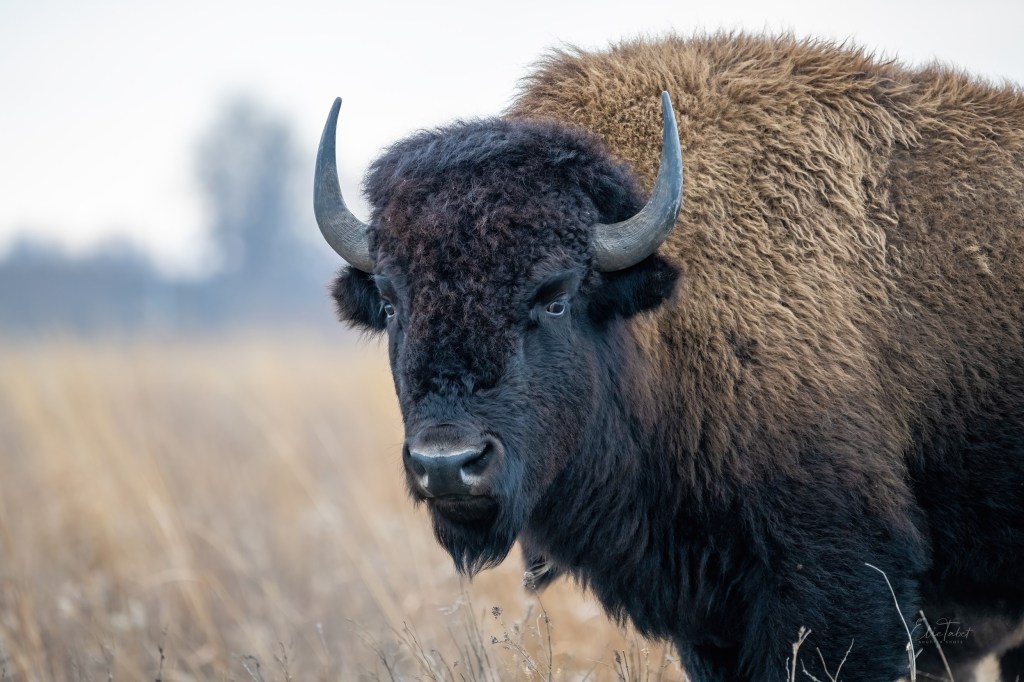
Much changed for the bison as they were nearly exterminated in the late 1800’s as documented in Ken Burns 2024 film The American Buffalo. Then came the fences and the isolation of the bison herds. Bison know what they need, but now, due to the inability to roam, bison can no longer follow the instincts that would have kept them healthy and strong.
But that dark time is illuminated by the many people who have come together to assist with nurturing and caring for the bison by diligently collaborating over the last 100 years to support bison conservation and a return of bison to cultures and landscapes. Together people have assisted in bringing back bison from just a few hundred to 500,000 across North America!
At Kankakee Sands, we have some of those very individuals right here on our staff and in our volunteer network!
TNC staff persons Olivia Schouten and Trevor Edmonson recently traveled to Denver to attend the National Bison Association’s winter conference. Olivia and Trevor networked alongside 600 other bison managers from private, public, tribal lands, and academic institutions, sharing knowledge about how to keep bison healthy and safe, and how also to keep the people that work with bison healthy and safe.
Our Kankakee Sands Bison Rangers are volunteers working alongside TNC staff to raise awareness of bison and prairies to preserve visitors. Our Bison Rangers attend trainings and workshops so that they are equipped with the information and confidence to welcome people of all ages and abilities to Kankakee Sands. Bison Rangers answer questions and inspire visitors to take action in their own lives for the good of the natural world and facilitate people falling in love with the bison. And we all know that we protect the things we love!

Interested to join our team of staff and volunteers who support our Kankakee Sands Bison Program by becoming a Bison Ranger? Reach out to our Indiana Volunteer Specialist, Esmé Barniskis at esme.barniskis@tnc.org to learn more.
As you enjoy watching the bison herd quietly grazing the prairies of the south pasture, know that there are many TNC staff and volunteers who are learning, sharing and caring for these magnificent animals here in Indiana and all across North America.
______________________________________________________________________
The Nature Conservancy’s Kankakee Sands is an 8,400-acre prairie and savanna habitat in Northwest Indiana, open every day of the year for public enjoyment. It’s an exciting year for Kankakee Sands, as we are making major improvements to popular areas within the preserve. If you plan to visit, please check our Facebook page to see if any of the areas you want to see will be impacted by the construction. For more information about Kankakee Sands, visit www.nature.org/KankakeeSands or call the office at 219-285-2184.
 Friends of the Sands
Thank you, Jeanette!
LikeLike