By Alyssa Nyberg, Preserve Coordinator, Efroymson Restoration at Kankakee Sands
This Mother’s Day, whether you are thanking your own mother, or someone who was a mother to you, or even Mother Earth, let’s also thank the Bison mamas who are out there on the Kankakee Sands prairie raising the next generation of keystone grazers.
Those cows with calves are doing important work! After having successfully birthed their calves in a quiet private place on the prairie, they lead their calves back to the main herd where their lives become intertwined with the lives of the other members of the herd. During that first year, the mother and her calf are nearly inseparable. And during that time together, not only is the cow providing nutrition-rich milk to her calf, she is also teaching her calf what it needs to fear, when it is best to lie down and relax, good locations for wallowing and prime eating locations.
Currently, one of those prime eating places is in the south bison pasture where The Nature Conservancy (TNC) staff conducted a prescribed burn on 169 acres on the west side of the pasture this past winter. The goal of the burn was to remove last year’s dry vegetation to make way for the lush green nutritious plant growth. This practice of intentional burning for grazers is called “patch burn grazing” and is a way to encourage grazers such as cattle, sheep, or bison to forage in particular areas, without the use of fences.
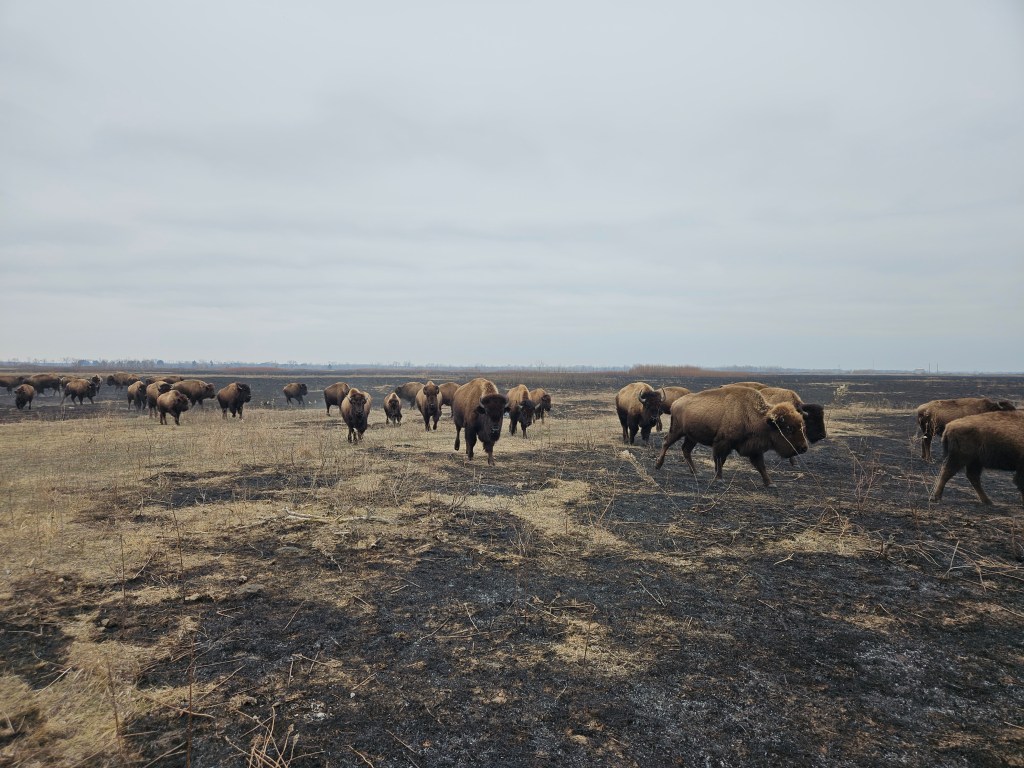
Patch-burn grazing is a way for our own TNC staff to work in unison with the bison – a keystone species of the prairie – to transform a landscape. Fire trained TNC staff conduct prescribed burning on an identified section of ground to assist with halting the advance of invasive and unwanted plants and removing the previous year’s stems, sticks and leaves. As the days pass, the blackened earth comes alive with the fresh, nutritious, tender vegetation in areas completely devoid of nose stabbing sticks and stems of last year’s vegetation.
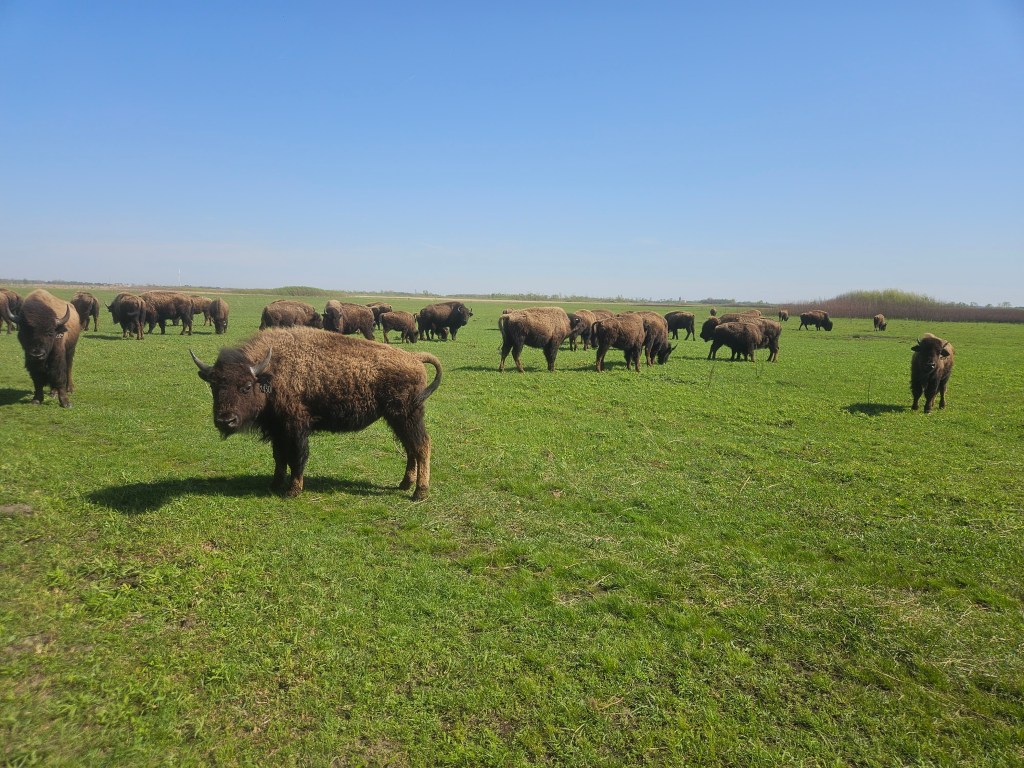
Then in come the bison to dine on the tender grasses. As they do, they make way for more flowering plants. And we know that when there are more flowers, there are sure to be more butterflies, bees, moths and pollinators of all shapes and sizes. And where there are more pollinators, there are sure to be more insect-eating birds. Ah-ha! Through its grazing action, the bison lives up to its title as a keystone species and has a profound effect on the food web of the prairie ecosystem!!
If you would like to visit Kankakee Sands this spring to see the bison mamas and calves, make your way to the Bison Viewing Area gravel drive off of County Road 400 W and look south over the bright green prairie. It’s very likely you’ll be able to witness the bison cows grazing with their calves. Happy Mother’s Day, mamma cows—you’re doing great!
___________________________________________________________________________
The Nature Conservancy’s Kankakee Sands of Indiana and Illinois is 10,000 acres of prairie and savanna habitat in Northwest Indiana and Northeast Illinois, open every day of the year for public enjoyment. For more information visit www.nature.org/KankakeeSands or call the office at 219-285-2184. To receive a copy of our quarterly newsletter with events and activities at Kankakee Sands, send an email to anyberg@tnc.org.

