By Alyssa Nyberg, Preserve Coordinator, Efroymson Restoration at Kankakee Sands
As the days grow shorter and night comes sooner, I enjoy all the fluttery things.
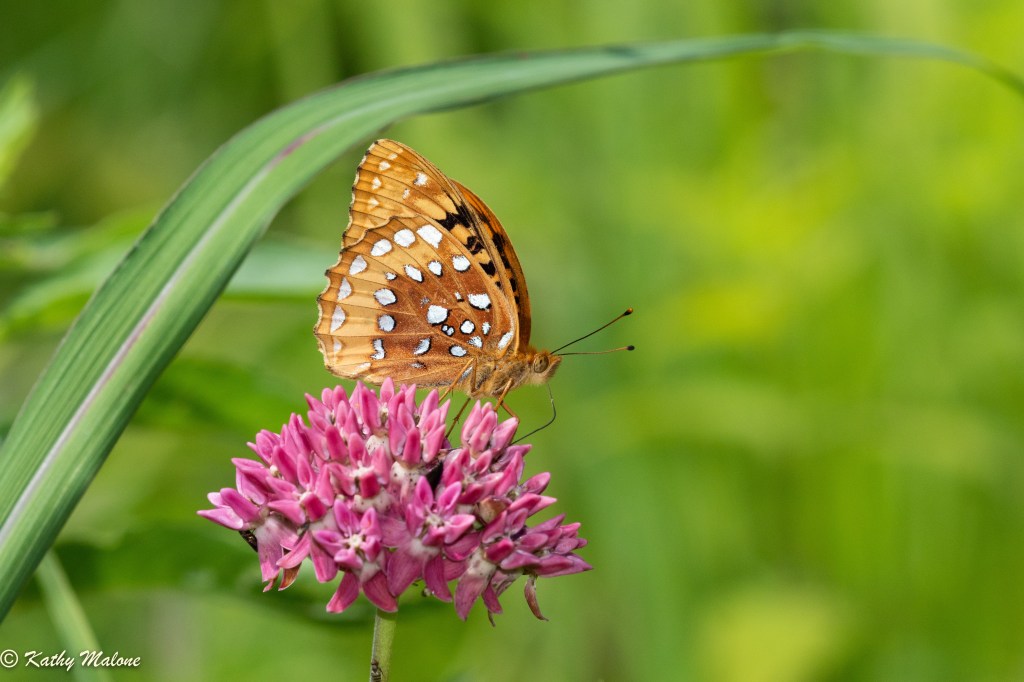
The brilliant day-flying butterflies delight me. I love the flashes of color across the open sky, the undulating patterns as they float like fairies on the warm fall days. Relaxing and gently pumping their wings as they nectar on a flower in full bloom. Would you believe that in Indiana, we have 95 species of butterflies that are listed as native to the state? At Kankakee Sands, we have documented 75 different species of butterflies visiting the prairie!
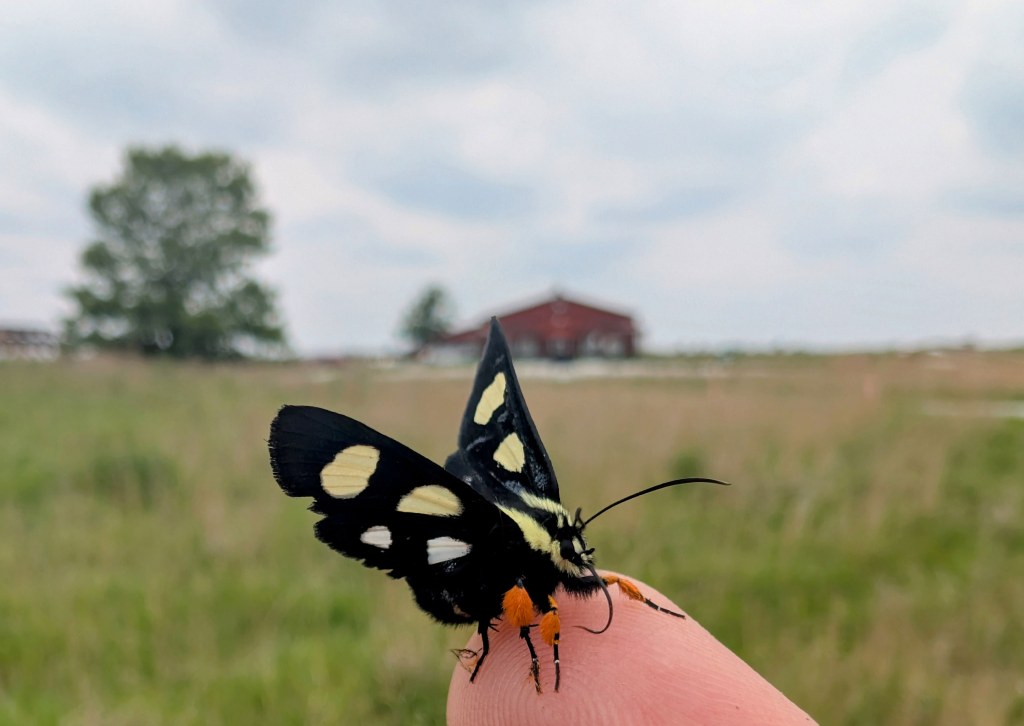
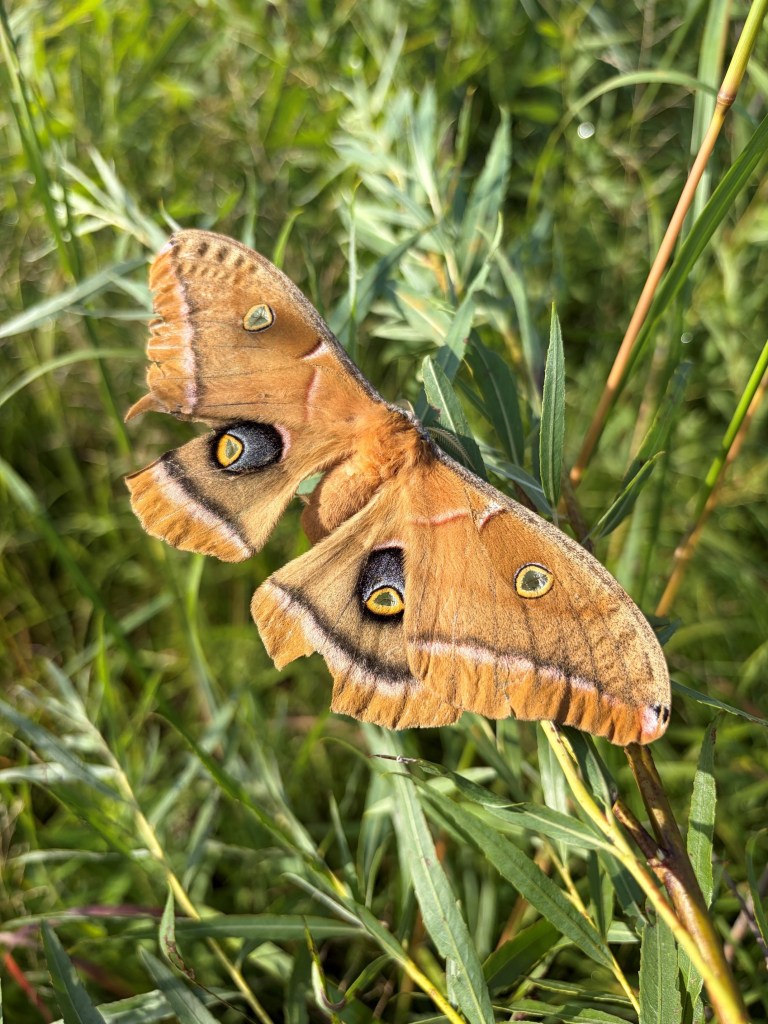
Now that night-time falls earlier, I cherish more night-flying moths, flocking to the light on the office porch. Swirling round and round, then settling at just the right distance from the warmth of the light. For all the pop and wow of most butterflies, most moths are in “I’m going to hide” or “I’m going to try to scare you” attire. Being stationary and resting during the day, blending in and being camouflaged with one’s background is a brilliant strategy. However, should a moth be detected by a hungry predator, perhaps having big round scary owl-like eye spots on its wings will help it avoid getting eaten! The diversity of moths in Indiana is astounding… there are 2,765 species of moths documented in the state, of which 1452 have been sighted here at Kankakee Sands!
As different as they may seem, butterflies and moths are related, in a rather shocking way. You may have a vague memory from science class in middle school that insects such as butterflies and moths in the animal kingdom fall into the Order Lepidoptera, meaning scaled winged insects. As it turns out, moths evolved some 300 million years ago (right?!) and it wasn’t until some 100 million years ago that some of these species evolved to be day-flying nectar-loving species. This means that butterflies are moths! This blows my mind every time!
Little do these winged beauties, in all their stripes and hues, know how much they do for the prairies. Yes, it is true that the butterfly caterpillars may eat the leaves and the moth caterpillars may eat the seeds or tunnel into the stems. Caterpillar frass (poo) can pile up at the base of a plant and look a little unsightly. Yet, as they reach into the flowers with their long tongue for nectar, butterflies and moths accidentally pick up one flower’s pollen and transfer it to another flower – pollination! Caterpillars are essential food for the many birds of the prairie; vulnerable caterpillars are unsuspectingly lifted from their resting place by an adult bird and fed to young, hungry, growing nestling birds. Moths, butterflies and caterpillars are also eaten by adult birds as well.
In addition to all this, moths and butterflies give us insights into what plants may be growing in our area; the presence of particular species of moth or butterfly indicates that its host plant must be present. For example, should you see a Polyphemus moth, you know there must be birch, maple or oak trees nearby. A great spangled fritillary is a good indication that violets are in the vicinity. These little winged marvels are nuggets of information about our greater community landscape.
Join us in celebrating the butterflies and moths of Newton County that delight our hearts, inspire our spirit, and excite our minds! On Saturday, September 12, 2026 to from 1 to 3 pm, central time, Friends of the Sands will be hosting Monarch Migration at Kankakee Sands to learn about tagging monarchs during their annual migration to Mexico. And later this same day, from 7 to 9 pm, central time, there will be a mothing event to identify the moths that congregate around lights and sweet banana paste at Conrad Station Savanna. To find out more, visit the Friends of the Sands events calendar. _____________________________________________________________________________
The Nature Conservancy’s Kankakee Sands is an 8,400-acre prairie and savanna habitat in Northwest Indiana, open every day of the year for public enjoyment. For more information about Kankakee Sands, visit www.nature.org/KankakeeSands or call the office at 219-285-2184.

